

Injured your calf? Calf tightness? Think a few simple bodyweight calf raises will get you sorted? Think again!
Firstly let's look at the contribution of the calves when running, & in short, they do a LOT of work. The larger of the calf muscles, the soleus, is highly important for running taking 6...

Whilst it's not as big a player as many other muscles during running, the glute max plays a role nonetheless! After all, the glute max is the BIGGEST muscle in our body, so it's got to be doing something!
The glute max is most active during the initial contact phase of running as it resists ground ...

😖Stiff, tight calves? Here are a couple of tests that we use to assess calf flexibility & how we use them.
📏🦵First up, we have the Weight-bearing lunge test, also known as the knee-to-wall test. With the toes facing straight forward, drive the knee as far forward as possible, ensuring the hee...

The paratenon can be a cause of tendon pain, but what is it & how can it be fixed?
The paratenon is a sheath that covers the Achilles’ tendon which can get irritated & cause tendon pain. Its' function is to protect the Achilles tendon & reduce the friction between the tendon & adjacent structures...
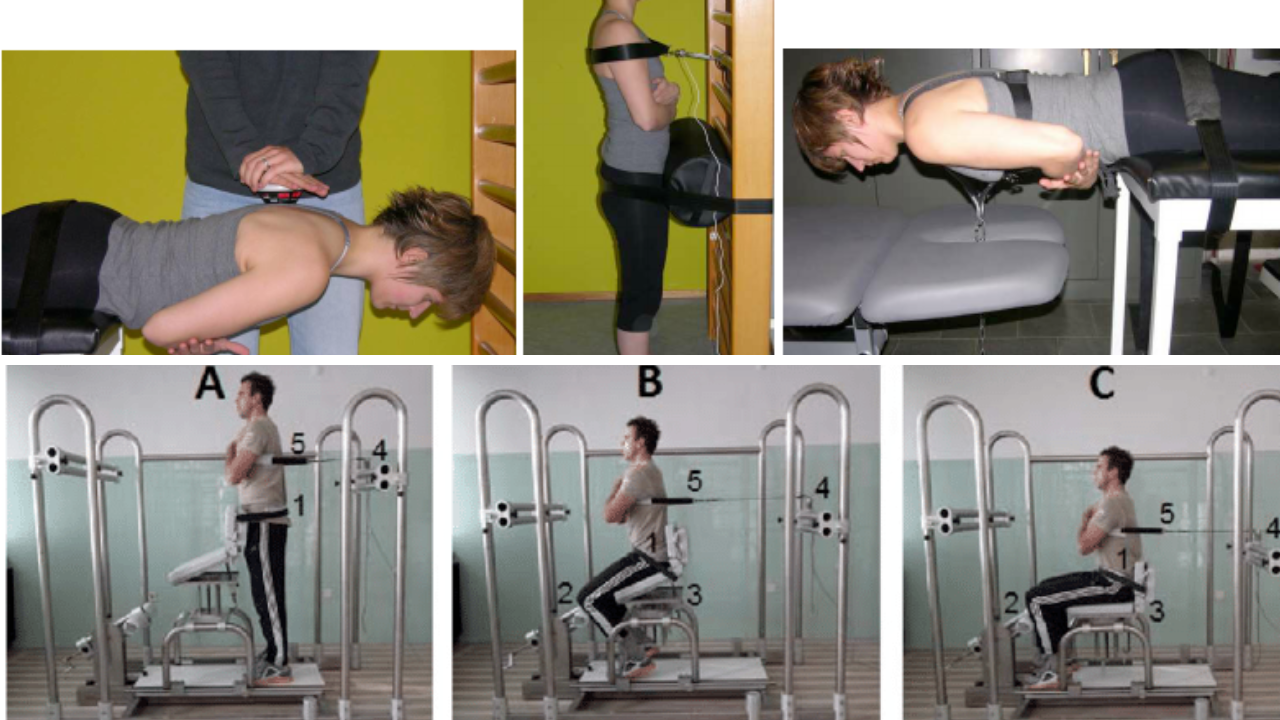
The Spinal Flexion Strength Test measures how much force a client can produce when flexing the trunk forward against a Muscle Meter, handheld dynamometer or fixed resistance setup.
This test can be performed using either:
-
The pusher cap, where the client pushes forward directly into the Muscle
...

For runners, the quest for speed and efficiency is perpetual. While pounding the pavement and clocking in miles have been staples in every runner's regimen, the role of strength training in enhancing performance has been a topic of debate. Recent studies shed light on the impact of various strength ...

If we again delve into Tim Dorn’s 2012 study on the contribution of various muscles in running, we see the hip flexors (iliopsoas) performing close to 2 x bodyweight of work at slower speeds, but with an increased contribution at faster speeds, to the point where at 9 metres per second, the iliopsoa...

Ever wondered how your calf raise technique can impact different muscles in the calf group? Let's explore the science behind knee-bent vs. knee-straight calf raises! 🦵💡
🔍 Muscle Trio:
The calf muscle group comprises three main players – the medial gastrocnemius, the lateral gastrocnemius, & the so...

🏋️Progressive loading of the Achilles tendon🤸♀️
🎯A neat study has recently been published by Baxter et al, which examined the Achilles tendon load in common exercises & compared them to walking and running.
🔍Our previous post discussed the importance of doing more than just calf raises to prepar...

So we’ve previously discussed that your running technique CAN be changed (here), but the more important question is: SHOULD you change it? So let’s discuss some of the reasons FOR and AGAINST changing running technique.
FOR
Symptom modification
-
There have been multiple studies showing bot...

“The way you run, is the way you run” is a common statement we hear when it comes to running technique, inferring that you can not change the way you run. So can you change how you run?
Running is a complex skill, represented as such in the brain alongside other complex movement skills like swing...
Single-Leg Balance With Head Rotation progresses static single-leg stance by adding horizontal head turns. Direct evidence for this exact MAT test is limited, but related vestibular screening research uses standing balance tasks with yaw head rotations to increase sensory and vestibular challenge. ...


