
Persistent pain can be influenced by many factors, including tissue sensitivity, nervous system processing, sleep, stress, mood, fatigue, previous injury, activity exposure and broader health context.
The Central Sensitisation Inventory was developed to help identify symptoms that may be associated...
Joint hypermobility describes joints that move beyond the range typically expected for a person’s age, sex, body type and activity background.
Some people with hypermobility have no symptoms and function well. Others may report symptoms such as pain, fatigue, recurrent sprains, instability sensatio...
Low back, buttock and pelvic-region symptoms can be influenced by many factors, including the lumbar spine, hips, sacroiliac-region structures, pelvic girdle load transfer, muscle function, symptom irritability, training load, occupational demands and broader pain mechanisms.
Pelvic Spring Tests ar...
Neck pain can affect more than local discomfort. It may influence daily activity, work, training, social participation, mood, confidence, fear of movement and perceived control.
The Neck Bournemouth Questionnaire was adapted from the original Bournemouth Questionnaire to provide a short, multidimen...
Headaches can affect daily activity, work, training, concentration, social participation, mood, sleep, confidence and quality of life.
The Headache Disability Index gives professionals a structured way to understand how headaches are affecting the client’s life beyond pain intensity alone. It is co...
Knee symptoms can affect walking, stairs, squatting, running, jumping, changing direction, training, sport participation and confidence with movement.
The IKDC Subjective Knee Form gives professionals a structured way to understand how the client perceives their knee function and symptoms. It is co...
The ACL-RSI is a 12-item client-reported outcome measure designed to assess psychological readiness to return to sport after anterior cruciate ligament injury or reconstruction. It includes items related to emotions, confidence in performance and risk appraisal.
Scores are usually converted to a 0–...
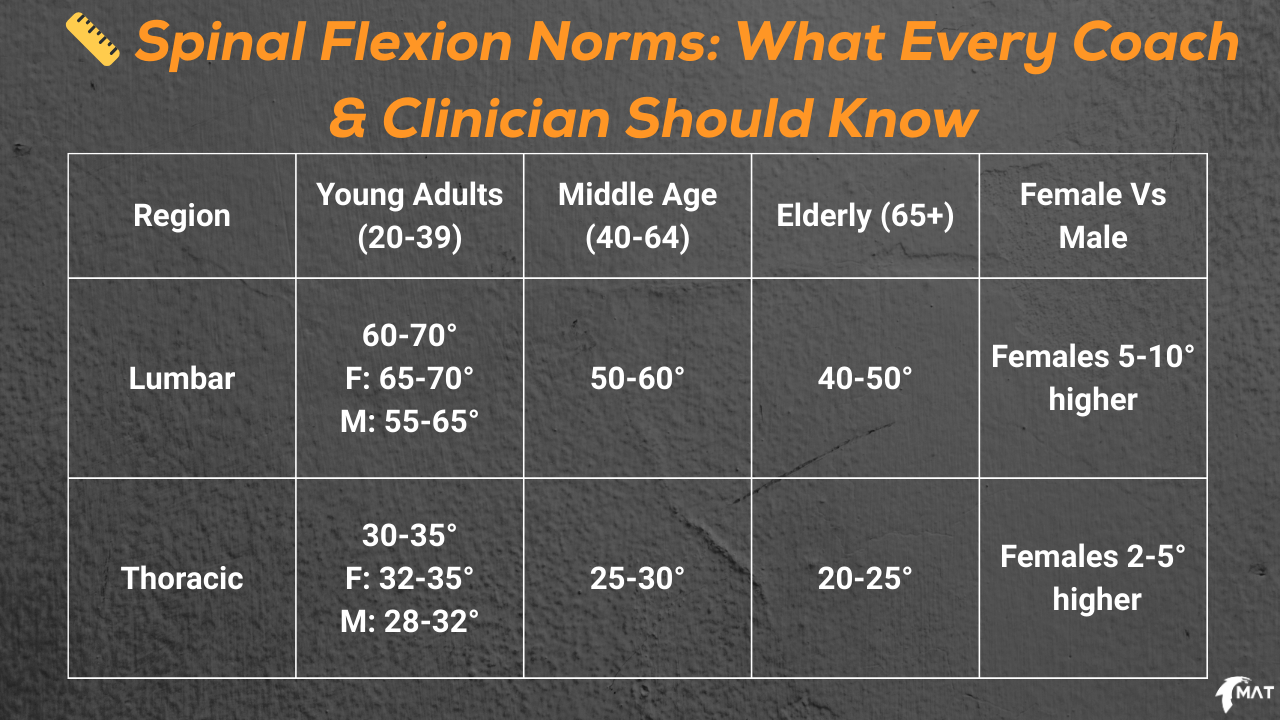
Most practitioners agree that spinal mobility is important. The harder question is how much mobility is actually normal — and how to interpret deviations without over- or under-reacting.
Normative spinal flexion data provides essential context, allowing mobility findings to be compared against expe...

The Shoulder Pain and Disability Index, or SPADI, is a 13-item patient-reported outcome measure used to assess shoulder pain and shoulder-related disability. It includes a 5-item Pain subscale and an 8-item Disability subscale, with scores usually reported from 0 to 100. Higher scores indicate great...

The Upper Extremity Functional Index, or UEFI, is a patient-reported outcome measure used to assess upper limb function across shoulder, elbow, wrist and hand presentations. The original version includes 20 items scored from 0 to 4, producing a total score from 0 to 80, where higher scores indicate ...

The Oxford Shoulder Instability Score, or OSIS, is a 12-item patient-reported outcome measure developed for people with shoulder instability, including dislocation and subluxation presentations. Each item is scored from 0 to 4, giving a total score from 0 to 48, where higher scores indicate better s...

The Spine Function Index-10, or SFI-10, is a shortened whole-spine patient-reported outcome measure used to assess functional limitation related to spine problems. It was developed from the longer Spine Functional Index and is designed to support practical monitoring across neck, thoracic and low ba...


