
Waist girth, also called waist circumference, is a common body measurement used to record the circumference of the abdomen. It is widely used in health, fitness, workplace, rehabilitation, sport and performance settings because it is quick, low-cost and easy to repeat when performed consistently.
W...
Arm span, sometimes called wingspan, measures the distance between the tips of the middle fingers when both arms are stretched out horizontally. It is a common anthropometric measurement used in health, fitness, sport, workplace, rehabilitation and performance settings.
Arm span can provide useful ...
Skinfold assessment is a practical body composition method that estimates subcutaneous fat thickness at selected body sites. A 4-site skinfold test uses four measured sites to provide a simple and repeatable way to monitor changes in body composition over time.
One of the most widely recognised 4-s...
Arm girth is a practical body measurement used to record the circumference of the upper arm. It is commonly used in health, fitness, sport, workplace, rehabilitation and performance settings to track upper-limb size, compare sides and monitor change over time.
A standardised version of arm girth is...
Ankle girth is a practical measurement used to record the size of the ankle and surrounding foot region. It is commonly used when professionals want to monitor ankle size, side-to-side differences or swelling-related changes over time.
The ankle region includes bony landmarks, tendons, joint struct...
Calf girth, also called calf circumference, is a practical body measurement used to record the external size of the lower leg. It is commonly used in health, fitness, sport, workplace, rehabilitation and performance settings because it is simple, quick and easy to repeat when the same method is used...
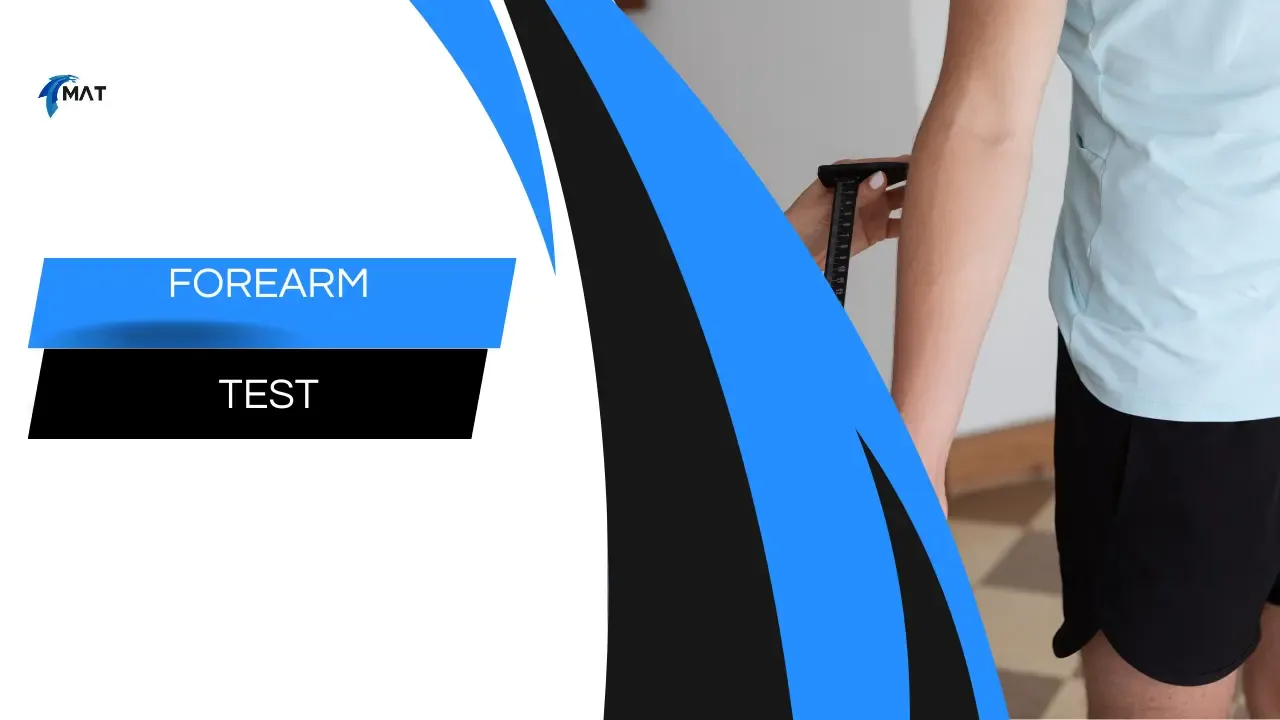
To measure forearm girth, follow these steps:
1. Use a flexible tape measure or a piece of string that can be measured afterward.
2. Stand with your arm extended in front of you and your palm facing up.
3. Locate the bony prominence on the side of your elbow, called the lateral epicondyle.
4. Place th...
To measure a client's arm length from C7 SP to 3rd digit, follow these steps:
1. Ask the client to remove any bulky clothing and to stand up straight with their back against a wall.
2. Locate the seventh cervical vertebra (C7), which is the bony prominence at the base of the neck.
3. Use a measuring ...
To measure a client's leg length from ASIS to medial malleolus, follow these steps:
1. Ask the client to remove their shoes and any bulky clothing.
2. Ask the client to lie down on their back on a flat surface, such as an examination table.
3. Locate the anterior superior iliac spine (ASIS), which is...

To measure a client's ankle girth, follow these steps:
1. Ask the client to remove any bulky clothing and to sit on a chair with their feet flat on the ground.
2. Locate the bony prominence on the inside of the client's ankle, called the medial malleolus.
3. Place the tape measure or string just abov...

To measure a client's calf girth, follow these steps:
1. Ask the client to remove any bulky clothing and to stand up straight with their feet shoulder-width apart.
2. Locate the widest part of the client's calf muscle, which is typically around the midpoint of the lower leg.
3. Place the tape measure...

To measure a client's knee girth, follow these steps:
1. Ask the client to remove any bulky clothing and to sit on a chair with their feet flat on the ground and their knees bent at a 90-degree angle.
2. Locate the midpoint of the client's knee joint, which is the bony part of the knee that protrude...


